Skinput: Appropriating the Body as an
Input Surface
Devices with significant computational power and capabilities can now be easily carried on our bodies. However, their small size typically leads to limited interaction space (e.g., diminutive screens, buttons, and jog wheels) and consequently diminishes their usability and functionality. Since we cannot simply make buttons and screens larger without losing the primary benefit of small size, we consider alternative approaches that enhance interactions with small mobile systems.
One option is to opportunistically appropriate surface area from the environment for interactive purposes. For example, Scratch Input is technique that allows a small mobile device to turn tables on which it rests into a gestural finger input canvas. However, tables are not always present, and in a mobile context, users are unlikely to want to carry appropriated surfaces with them (at this point, one might as well just have a larger device). However, there is one surface that has been previous overlooked as an input canvas, and one that happens to always travel with us: our skin.
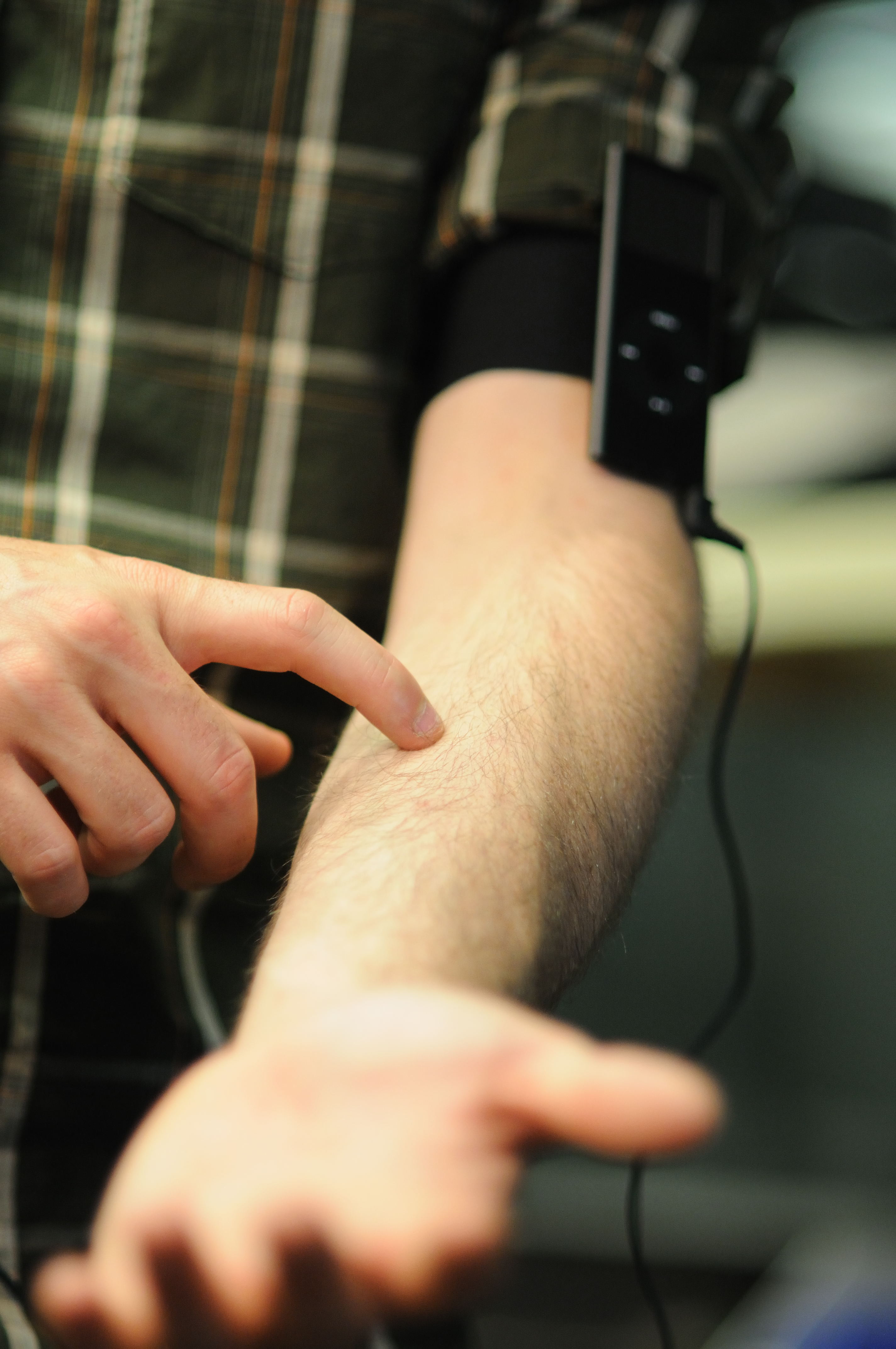
Appropriating the human body as an input device is appealing not only because we have roughly two square meters of external surface area, but also because much of it is easily accessible by our hands (e.g., arms, upper legs, torso). Furthermore, proprioception (our sense of how our body is configured in three-dimensional space) allows us to accurately interact with our bodies in an eyes-free manner. For example, we can readily flick each of our fingers, touch the tip of our nose, and clap our hands together without visual assistance. Few external input devices can claim this accurate, eyes-free input characteristic and provide such a large interaction area.
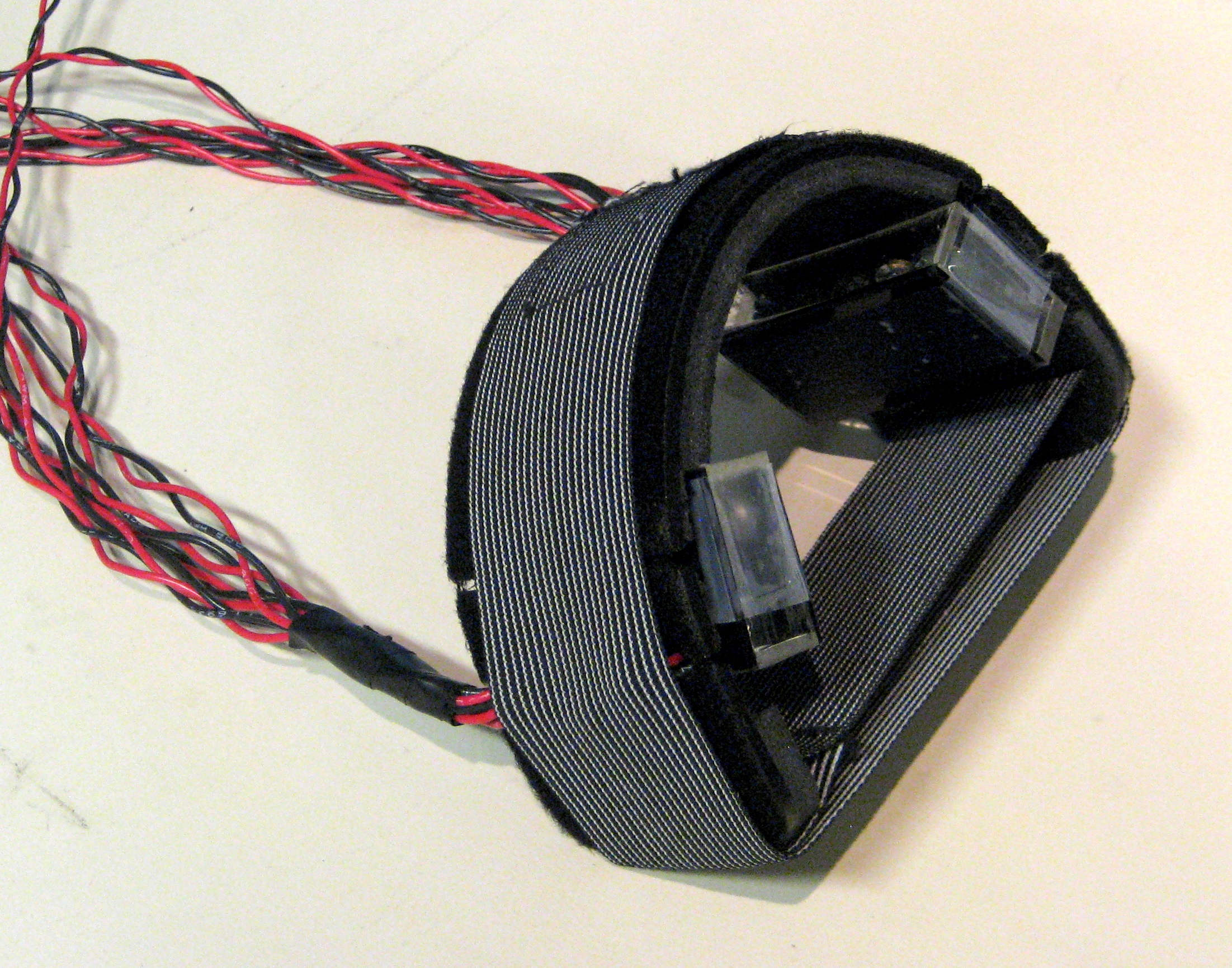
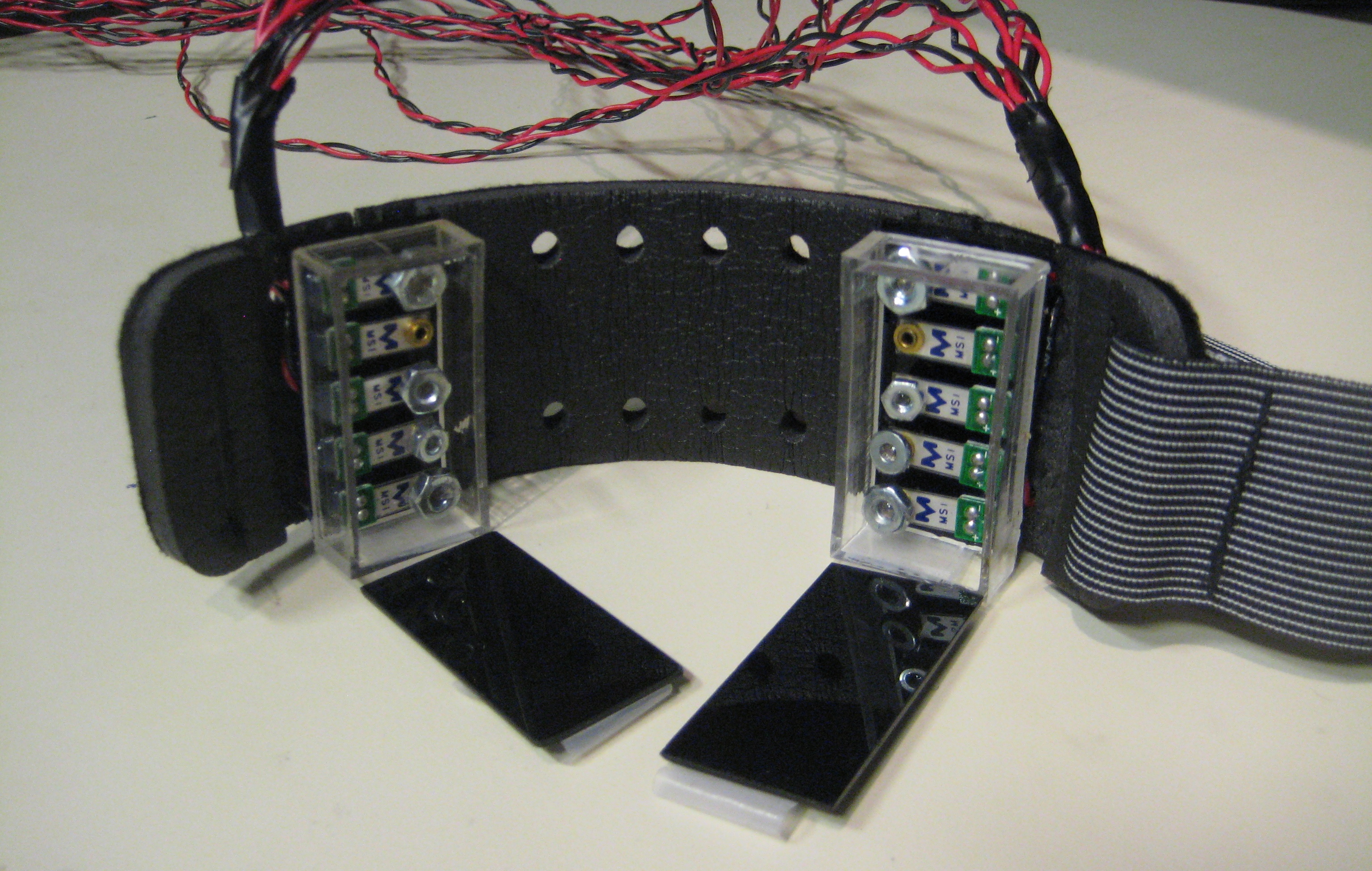
In the paper linked below, we present our research on Skinput – a method that allows the body to be appropriated for finger input using a novel, non-invasive, wearable bio-acoustic sensor.
Download
Reference
Harrison, C., Tan, D. Morris, D. 2010. Skinput: Appropriating the Body as an Input Surface. In Proceedings of the 28th Annual SIGCHI Conference on Human Factors in Computing Systems (Atlanta, Georgia, April 10 - 15, 2010). CHI '10. ACM, New York, NY. 453-462.
High Resolution Photographs
Video Downloads
Hierarchical button-based interface 1
Hierarchical button-based interface 2
Hierarchical button-based interface 3
Hierarchical sliding-based interface 1
Hierarchical sliding-based interface 2
Pinch to go back (hierarchical menu)
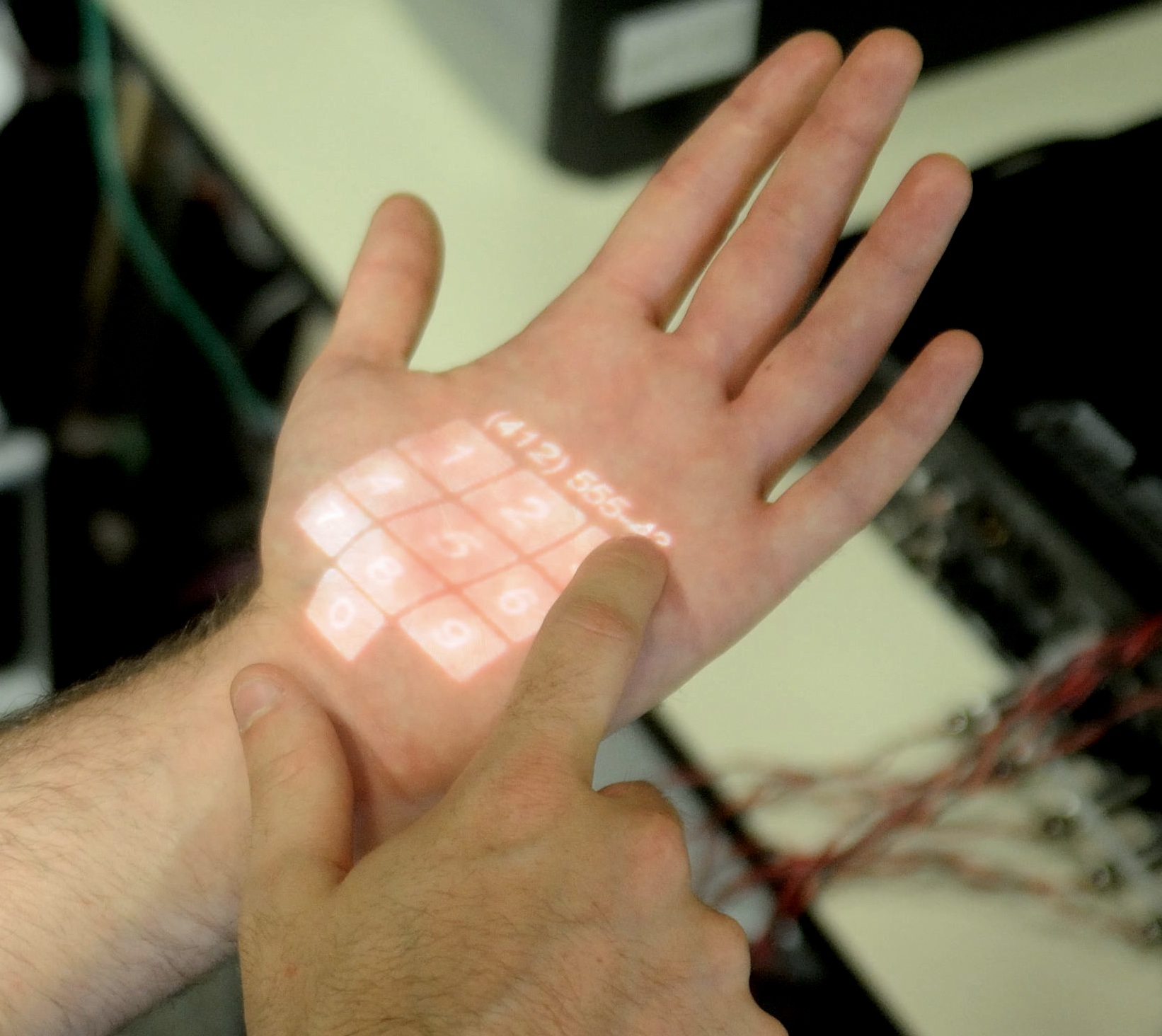
Keypad dialing
Tetris 1
Tetris 2
Frogger / four-way control
Training and classification demo
|
|
|